
Blog Content
Recruiters! With 80% of your day spent doing the wrong things, having to network around 7 people per sale, and the growing trend on relying on DATA to make your sale, what's does this year look like, and how can you use recruitment automation to generate more speed and pipeline?
My Interview With Billy at Bullhorn Automation
I spoke with Billy Davis at Bullhorn Automation - who's mission it is to revolutionise the recruitment industry. We've been working closely with him help our mutual clients to automate their recruitment processes. I asked Billy 3 questions about how recruitment automation can help drive sales (and productivity).
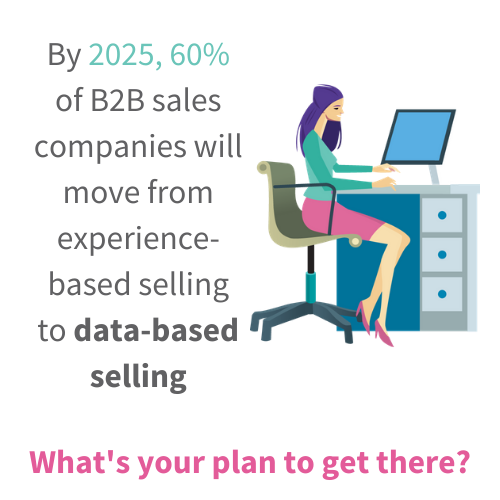
1. Billy, what are your thoughts B2B sales about how to use automation for data-based selling?
.png)
I think providing a great experience will always have a positive place in sales. With the advancement of AI and machine learning I can see a time in which data becomes the biggest decision making factor in the sales process. We already see some of those shifts in the market today. Poor data quality undermines the effectiveness of AI and machine learning. The biggest benefit of Automation will be the increase in data quality. Identifying and fixing incomplete records, reducing manual data entry, and copying information already known from one area and transporting it to another are just a few mechanisms to achieve this.
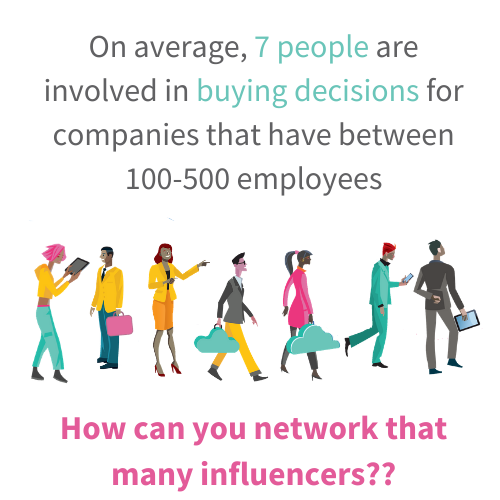
2. Billy, how can recruitment automation help "nail the sale"?
.png)
The most important advice here is to create a personal or employment brand so compelling that it can reach all those levels of connections. Recruitment automation can help in two critical capacities. It can act as your megaphone to the market and amplify your reach. It can ensure fantastic experience for candidates/clients so you have as many promoters as possible.
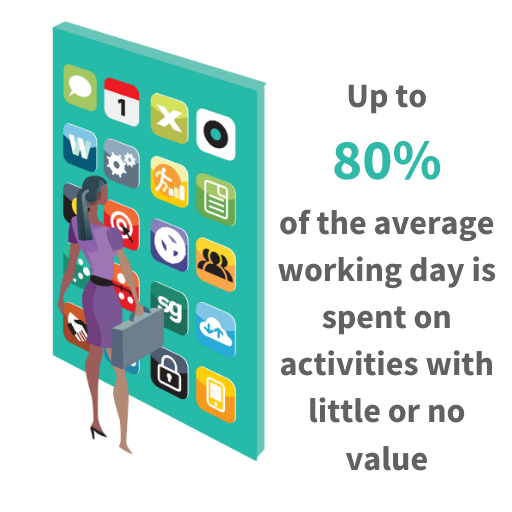
3. Billy, how can automation help recruiters focus on what they need to do to attract, engage, convert, and retain – rather than procrastinate?
.png)
Automation is a tool to solve this problem. Not a solution in and of itself. Understanding the difference between value and non-value activities and coming up with a strategy to change existing behaviour is the ultimate solution. Automation can accelerate that strategy when deployed correctly. Examples include; Eliminating busywork, real time reminders/alerts with process instructions, client/candidate journeys to eliminate lack of communication at any recruitment stage, placement check ins and touchpoints, activity/behaviour driven communication and follow up, and freeing up time for relationship building.
---
Monetise and Weaponise Your Recruitment Data, Time, and Targets
I'm excited about how recruitment automation positively impacts on the day of a recruiter - generating more time, better 3Cs (candidates, clients, colleague) expectations and experience - and really help the industry get back on track after such a disruptive few years.
We help recruiters via our Automation Buddy Programs to really monetise and weaponise their data, time, and targets.
READ ABOUT RECRUITMENT AUTOMATION
BOOK A CALL TO DISCUSS BULLHORN AND BULLHORN AUTOMATION
Extra Content
Blog Image
Extra Content 2
Recruitment Blogs / Tips / Webinars
Read more-
Lisa Jones
Blog
Stop Sourcing, Start Selling: Is Your Data Working or Just Sitting There?
Recruiters, let’s be honest: 80% of your day is likely spent on the wrong tasks. Even more staggering? 72% of the candidates you place were already on your system before you spent hours sourcing them elsewhere.You are sitting on a goldmine (eg. Bullhorn), but you're still digging in the woods and mining data from countless other sources like LinkedIn, Job Boards etc...How do you stop the procrastination loop and start weaponising your data to drive ROI?Here are the three most common questions I get from recruitment leaders on using data to dominate the market.1️⃣How can recruiters use data to drive the sales process?📌Clean data = Data Health = Data Wealth.This is the backbone of a successful desk. The best recruiters don't just "find people"; they provide a service that sets them apart through market intelligence.Market Intelligence builds credibility. Sharing real-time trends like salary shifts, candidate flow, or niche skills gaps positions you as a trusted partner rather than just another CV flinger.Master the "Trigger Event". Don’t call cold; call when it’s hot. Use data to track funding rounds, senior leadership changes, or office expansions.Example: If a startup hits Series B funding, they aren't just "busy"—they are scaling. If your tech alerts you the moment that deal closes, you can be the first to engage and have candidates ready to spec in.2️⃣Business Development vs. Account Management: Where is the leak?📌Reconverting existing clients is critical.It is significantly cheaper than winning new ones, yet many recruiters let these relationships go cold.Spot the weak links. Use analytics to identify accounts with declining activity. If your star client hasn't logged a job in 60 days, you shouldn't find out by accident.Map the client. Use automation to map out your clients’ entire org charts. Ensure you are seeing all of their jobs so you aren’t losing deals to competitors simply because you were only talking to one person in the department.3️⃣How do we kill procrastination and find focus in recruitment?📌Recruitment is one of the most complex roles out there.We ask consultants to be researchers, data entry clerks, negotiators, and marketers all at once. It is no wonder procrastination is rife.Automate the busy work. Automate data health checks, initial searching, and basic BD outreach.Cure message paralysis. Use AI to draft the first version of your outreach. Don’t stare at a blank screen; let the tech give you the bulk of the work, then you add the human flair.Analyse the data, tasks, and time: Use Analytics to drive meaningful and mindful activities.The phone is king. By automating the data drudgery, you clear the headspace to do what you do best: get on the phone and build relationships.💪Conclusion: Data is Your Competitive EdgeThe "post and pray" era of recruitment is over.In a crowded market, the recruiters who win are those who treat their database as a living, breathing sales tool rather than a digital filing cabinet. By embracing AI, Analytics, and Automation, you aren't replacing the human element. You are freeing your team up to finally be more human.📌Stop searching for what you already have. Start using your data to win.Bullhorn ATS / Analytics / Automation / AI RoIWe are Bullhorn experts set on helping ambitious recruitment businesses to increase speed and sales.We help you weaponise your people, data, time, and tech, so you can recruit and sell!Our Bullhorn Vision and Buddy service helps generate best-in-class processes, adoption, head space, and ROI.BOOK A FREE BULLHORN ROI CONSULTATION
-
Wayne Barclay
Blog
Why Your Bullhorn Stack is the Secret to Rehumanising Recruitment
In the high-stakes world of UK recruitment, there’s a nagging anxiety that sits like a ghost in the machine: the "roboticisation" of the industry.Many recruitment agency owners I speak with worry that leaning too heavily into their tech stack (specifically a powerhouse like Bullhorn) risks turning their recruiters and resourcers into data-entry admins and their candidates and clients into mere serial numbers.There's a distinct lack of picking up the phone, at a time when it's never been more important.But if you’re viewing recruitment technology as a barrier to human connection, you’re looking at it through the wrong end of the telescope.RehumanisationThe primary goal for almost every high-performing recruitment and staffing agency I partner with isn't to automate people out of the business.It is to use technology to rehumanise the process.Here are 3 ways how we move beyond the theory of tech driving stronger relationships and rehumanising the recruitment process.1️⃣The Paradox of Manual LabourThe irony of modern recruitment is that the "human touch" is often killed by "robotic" manual tasks. When a consultant spends three hours a day manually parsing CVs, dragging files into folders, and sending "just checking in" emails, they aren't being human. They are acting like a slow, expensive algorithm.And they are likely missing the point of recruitment:Managing relationships.Spotting opportunities.Protecting pipelines.By the time they actually get a candidate or client on the phone, they’re drained and distracted.When we optimise Bullhorn by Bullhorn Automation, Analytics and AI, we aren't replacing the recruiter. We are stripping away the administrative "noise" that prevents them from being present. True automation handles the repetitive, low-value chores so your team can focus on the high-value, high-emotion conversations that actually land placements.Great analytics helps create meaningful time management and tasks to drive targets!AI creates space for mindful recruitment!📌These 3 As lead to a crucial 4th A - adoption! What's often missing from a recruiter's day is a great adoption of process.2️⃣Restoring the Candidate (and Client) ExperienceMany candidates have been on the receiving end of "robotic" recruitment: weeks of radio silence followed by a generic rejection email. Plus, clients often feel under managed and engaged with, and go elsewhere.That isn't the fault of the tech; it’s a failure to use it.📌A rehumanised process uses the ecosystem to ensure no one feels ignored.In a sophisticated Bullhorn setup:Speed is Empathy: Candidates and clients receive updates the moment a status changes because your workflow is triggered by their journey, not by a recruiter’s busy diary.Personalisation at Scale: You can reference a candidate's / client's specific niche, need, or career aspirations automatically, proving you’ve actually engaged with their profile.Consistency: Every contact receives a gold-standard experience, regardless of how many roles a consultant is juggling that week.3️⃣Data: The Compass for ConnectionData isn't cold; it’s context.When your Bullhorn data is clean and your tech is configured correctly, you gain a massive competitive advantage in relationship building. And your recruiters and resourcers value it, want to use it - RoI is achieved!Automations don't feel automatedAnalytics tell the right truth and drive brilliant activityAI releases procrastinationCandidates and clients are managed - everyone wins!Imagine a consultant calling a client and knowing exactly when they last spoke, the specific pain points mentioned six months ago, and exactly which candidate profiles resonated most. That isn't tech "taking over". Tech provides the insights needed to be a true consultant rather than just a CV chaser.💸💸The Bottom LineTechnology shouldn't be a wall between you and your market; it should be the bridge.My mission is to help you move past the "human vs. machine" debate and start seeing Bullhorn as the ultimate tool for liberation.When you automate the mundane, you empower your people to do what only humans can do: negotiate, empathise, and consult.I been in recruitment since 2000. This year, more than any other year, means that your human-connected-tech strategy has never been more important.Bullhorn ATS / Analytics / Automation / AI RoIWe are Bullhorn experts set on helping ambitious recruitment businesses to increase speed and sales.We help you weaponise your people, data, time, and tech, so you can recruit and sell!Our Bullhorn Vision and Buddy service helps generate best-in-class processes, adoption, head space, and ROI.BOOK A FREE BULLHORN ROI CONSULTATION


